
Have your eyes ever felt tired, dry, or blurry after a long day in front of a screen? With work meetings, online classes, streaming, and constant scrolling, most people spend more time on digital devices than ever before, and eye discomfort is a common result. This is known as digital eye strain, or computer vision syndrome.
The good news is that experts say screen time itself won’t cause permanent eye damage. But it can lead to temporary problems such as fatigue, headaches, dryness, blurred vision, or trouble focusing. Much of this comes from reduced blinking and prolonged staring, which make eyes dry out and feel irritated.
Sunir Garg, MD, professor of ophthalmology at Wills Eye Hospital and a nationally recognized voice in eye health, has explained to outlets like Insider and NBC Philadelphia that simple steps, like blinking more, taking regular breaks, and using lubricating drops, can go a long way toward relief. Here are his and other evidence-based tips on how to reduce eye strain from screens.
6 Tips to Reduce Eye Strain from Screens
1. Follow the 20-20-20 Rule
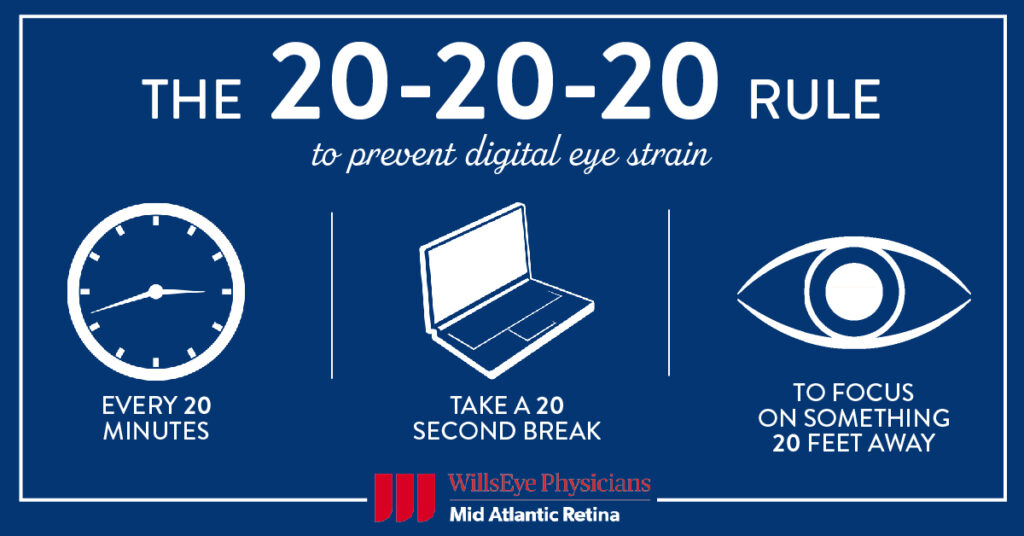
One of the simplest and most effective habits is the 20-20-20 rule. Every 20 minutes, look away from your screen at something about 20 feet away for at least 20 seconds. This brief pause allows your eye muscles to relax and reduces fatigue from prolonged close-up focus. Setting a timer or using an app can help build the habit.
2. Check Your Setup and Lighting
Your workspace environment makes a big difference in eye comfort. Dr. Garg recommends reducing glare and adjusting lighting so your eyes don’t work harder than necessary:
- Keep screens slightly below eye level to encourage a natural, relaxed gaze.
- Match the lighting so your screen isn’t much brighter or darker than the surrounding light.
- Minimize glare by using blinds, anti-glare filters, or by positioning lights to the side rather than directly behind you.
3. Adjust Your Screen Settings
Small changes to your device settings can reduce strain. Try these quick adjustments:
- Brightness: Keep screen brightness close to the light level of the room.
- Contrast: Increase contrast for easier text readability.
- Night Mode/Dark Mode: Using darker themes, especially later in the day, may help reduce glare.
4. Don’t Forget to Blink
Digital screen use changes how we blink, and people blink far less often when using computers or smartphones. This reduced blink rate leads to more rapid tear film instability (the protective layer of moisture over your eyes), which can cause dryness, irritation, or blurry vision. In fact, large studies have linked longer daily screen use with more frequent and severe dry eye symptoms.
Tip: Make a conscious effort to blink fully and often when working on screens. If your eyes still feel dry, lubricating eye drops can help restore moisture.
5. Use Lubricating Drops When Needed
Extended screen use often means less blinking, which leads to dryness. If your eyes feel irritated, scratchy, or tired, lubricating eye drops (artificial tears) can help.
These drops restore moisture to the surface of the eye, combating that “gritty” feeling many people notice after long device sessions. Keep a bottle on your desk and use them when you notice dryness or discomfort. If you’re relying on drops daily and symptoms continue, check in with your eye doctor to rule out other conditions.
6. Take Screen Breaks
Remember: the best rest for your eyes sometimes means stepping away entirely. Go for a walk, look out a window, or simply close your eyes for a few moments. Outdoors time is equally beneficial, as natural light and distant viewing give your eyes the break they need.
Frequently Asked Questions
Do blue light glasses help with digital eye strain?
While blue light glasses are heavily marketed as a cure for digital eye strain, some research shows the evidence isn’t strong. However, some people notice less glare or fatigue with tinted lenses, most experts agree that consistent screen breaks, good lighting, and lubricating drops are more effective for easing discomfort. Blue light filters on devices or wearing glasses may help with nighttime comfort or sleep patterns, but they aren’t a magic fix for eye strain.
How often should I have an eye exam if I use screens frequently?
Frequent screen use alone is not a reason to schedule more exams, but regular check-ups remain important. Adults should typically have a comprehensive eye exam every one to two years, depending on age and risk factors. And individuals age 65 or older should get one annually.
Final Takeaway
Digital devices are here to stay, but digital eye strain does not need to be part of daily life. Simple steps such as following the 20-20-20 rule, using lubricating drops, adjusting your screen setup, and keeping up with regular eye exams can reduce discomfort and help protect your vision.
While most cases of digital eye strain are temporary, persistent or worsening symptoms can sometimes signal a more serious issue affecting the retina. If you are concerned about your vision or need a specialist to evaluate ongoing problems, the Mid Atlantic Retina team is here to help. Request an appointment today.